Frequently Asked Questions
How can you tell if a Tibetan singing bowl is authentic?
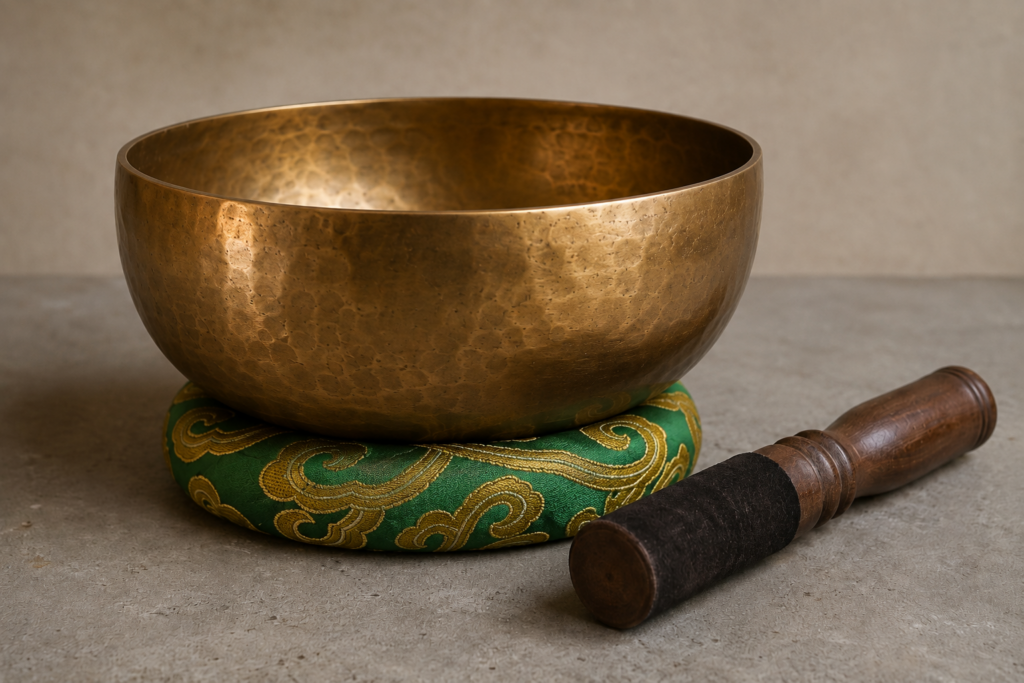
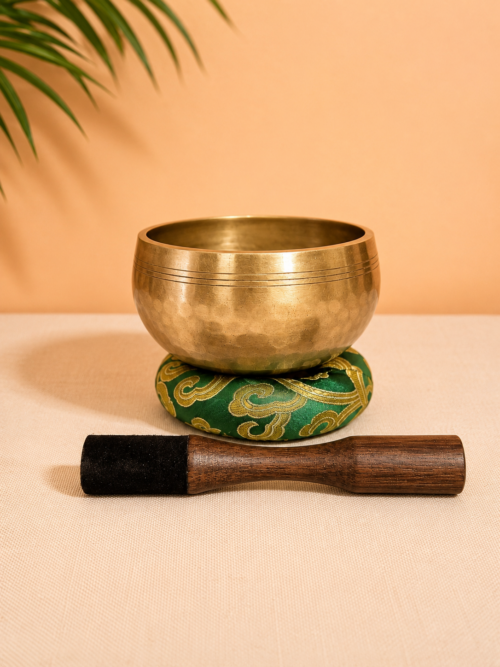
Hand-hammered Tibetan singing bowls usually have visible hammer marks, slight variations in shape, and a rich sound made up of several overlapping tones. Machine-made bowls tend to look smoother and more uniform, with a cleaner but simpler sound.
We clearly identify our bowls as either hand-hammered or machine-made. Our hand-hammered bowls are crafted in Nepal, and each product listing includes a recording of the exact bowl for sale. That way, you can hear its tone and character for yourself before you buy.
Are all singing bowls Tibetan?
No. Tibetan singing bowls, also called Himalayan singing bowls, generally refer to the traditional metal bowls associated with Nepal, Tibet, and northern India. Crystal singing bowls are a much more modern instrument made from quartz.
The two also sound quite different. Metal Tibetan bowls produce layers of harmonics and overtones, while crystal singing bowls are known for a clearer, purer sustained tone.
What are Tibetan singing bowls made of?
Most Tibetan singing bowls are made from a bronze alloy consisting primarily of copper and tin. You may also hear traditional stories about bowls being made from “seven sacred metals,” but the exact mixture can vary from one maker to another.
For the sound of the bowl, factors such as its size, wall thickness, shape, and hand-hammering generally matter more than the exact metal recipe. These differences are part of what gives each hand-hammered bowl its individual voice.
What's the difference between hand-hammered and machine-made singing bowls?
Hand-hammered bowls are individually shaped, so no two sound exactly alike. They tend to produce richer harmonics, more complex overtones, and a longer-lasting ring.
Machine-made bowls are more uniform and affordable, but they are still fully functional singing bowls. They can be an excellent choice if you’re new to singing bowls and want an inexpensive way to begin a daily meditation or relaxation practice.
The easiest way to understand the difference is to hear it. Listen to the recordings on our product listings and compare the sound of a hand-hammered bowl with one of our machine-made beginner bowls.
Which note should I choose?
Start by listening. Play the recordings for several bowls and notice which one you naturally keep coming back to. There is no single “right” note for everyone.
If you’d like some guidance, larger bowls generally produce lower, deeper tones that many people enjoy for relaxation, sleep, and grounding practices. Smaller bowls usually have brighter, higher tones that work well for meditation and shorter sound sessions.
Do Tibetan singing bowls need special care?
Not much. Keep your bowl dry, wipe it with a soft cloth when needed, and store it somewhere it won’t be dropped or dented.
Metal singing bowls are also more forgiving than quartz bowls when it comes to travel, handling, and changes in temperature. That durability makes them especially convenient for practitioners who regularly carry their bowls to classes, massage sessions, reiki appointments, or sound-healing work.


 Select an element to maximize. Press ESC to cancel.