

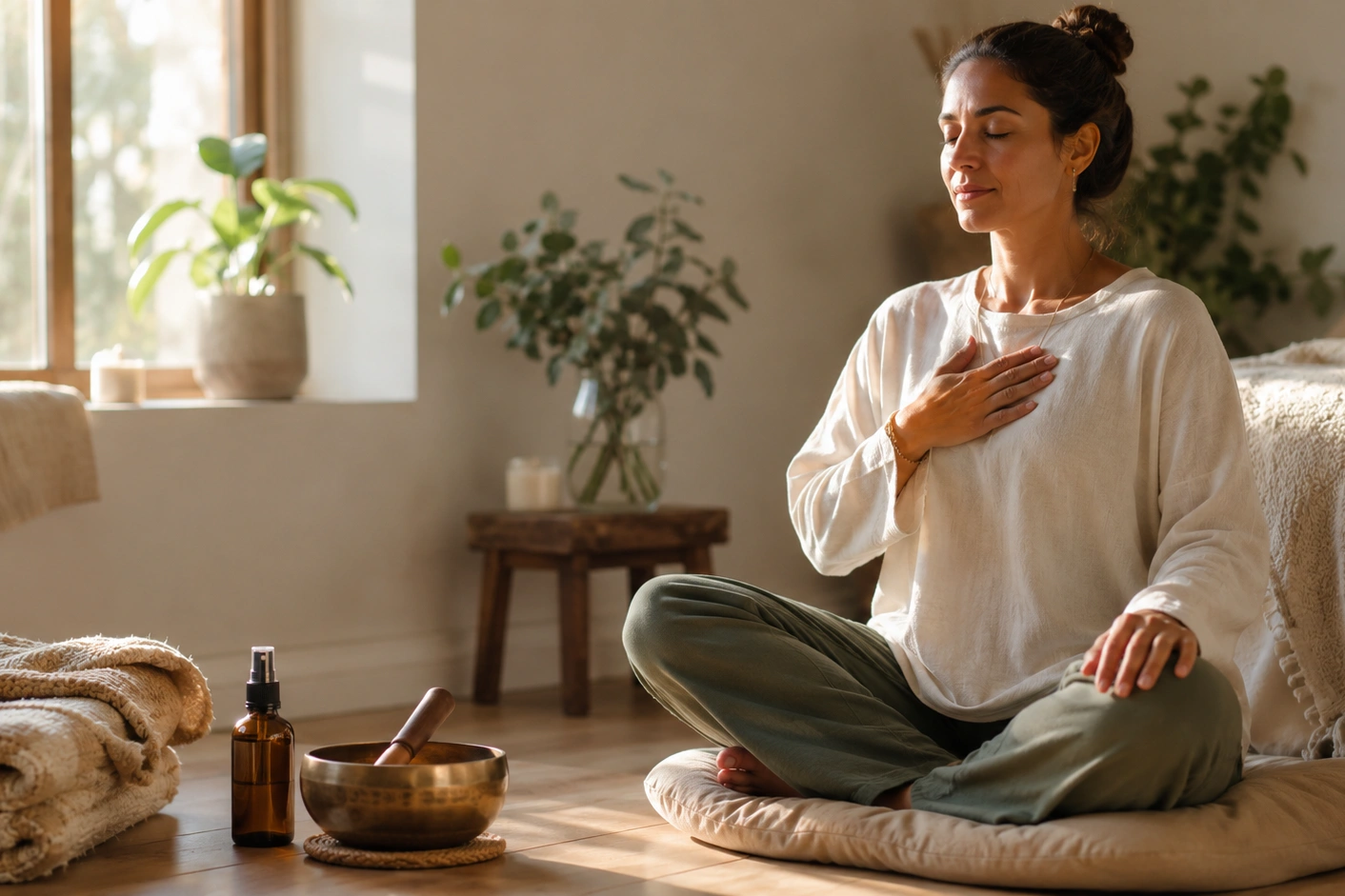
Some mornings, your mind starts moving before your feet touch the floor. Thoughts about work, unfinished tasks, family responsibilities, and everything waiting for you arrive within seconds. Your shoulders tighten, your breathing becomes shallow, and the day feels demanding before it has even begun.
A simple morning grounding ritual can create a pause between waking up and stepping into those demands. You do not need a long meditation session or a complicated wellness routine. Five quiet minutes with scent, breath, touch, and sound can help you reconnect with your body and begin the day from a steadier place.
This practice is often called a nervous system reset. Your nervous system does not literally turn off and restart, but a brief sensory ritual may interrupt rising tension and support nervous system regulation. Try the practice before reaching for your phone in the morning, or return to it whenever you feel anxious, overstimulated, or disconnected from yourself.
What Does a Nervous System Reset Mean?
A nervous system reset is a short practice that helps you pause, notice what is happening in your body, and return your attention to the present. Learning how to reset your nervous system begins with recognizing tension before it builds into overwhelm.
During a stress response, the sympathetic nervous system prepares the body to meet a challenge. Your heart may beat faster, your muscles may tighten, and your attention may narrow. This is commonly described as the fight-or-flight response. As the pressure passes, the parasympathetic nervous system supports rest, digestion, and recovery.
Nervous system regulation does not mean remaining calm at all times. It means becoming more able to move through stress and settle again afterward. A reset can support that process by giving you a familiar way to respond when you notice shallow breathing, a clenched jaw, racing thoughts, irritability, difficulty concentrating, or worry before the day has begun.
A grounding ritual will not remove every source of stress or treat an anxiety disorder. Its purpose is simpler. It gives you a structured way to pause, observe what you are feeling, and respond with greater care.
Grounding Techniques for Anxiety: Why the Senses Help
When anxiety pulls your attention toward what might happen next, grounding brings it back to what is happening now. Many grounding techniques for anxiety use the senses because they give the mind something immediate and concrete to notice.
You might feel the floor beneath your feet, listen to a sound across the room, notice the temperature of the air, or focus on a familiar scent. These sensory grounding techniques do not require you to argue with every anxious thought. They simply widen your attention so worry is no longer the only thing you notice.
Begin with a few neutral observations:
- My feet are touching the floor.
- The chair is supporting me.
- I can feel my hand against my chest.
- I can hear the sound fading.
- I am in this room right now.
These statements may feel more supportive than telling yourself that you need to calm down immediately. Grounding begins with noticing what is already true.
How to Feel Safe in Your Body
Anxiety can make the body feel tense, restless, or difficult to inhabit. You may hold your breath, clench your jaw, or feel as though your thoughts are moving faster than the rest of you. Rather than demanding that the tension disappear, begin by noticing where your body already feels supported.
Place one hand over your heart or abdomen. Press your feet gently into the floor and feel the surface beneath you. Ask what feels steady, where you are holding tension, and what may be ready to soften.
Learning how to feel safe in your body does not mean convincing yourself that everything is perfect. It means reconnecting with the body you are in and the place you are now. Scent and sound can help by giving your attention clear sensory anchors.
Essential Oils for Grounding and Aromatherapy for Anxiety
A familiar aroma gives your attention something present to notice. Instead of following a thought about a meeting, responsibility, or unfinished task, you pause and observe the scent in the room.
Our sense of smell is closely connected with memory and emotion. When you use the same aroma during a repeated ritual, it may gradually become associated with slowing down. The scent does not force your nervous system to relax, but it can become a familiar invitation to pause, breathe, and return to the present.
People exploring essential oils for grounding often choose earthy and woody aromas such as cedarwood, vetiver, pine, frankincense, patchouli, and sandalwood. Lavender may suit a softer relaxation ritual, while bergamot and other citrus scents can feel lighter and more uplifting. The best option is a scent that feels pleasant and comfortable to you.
Research into aromatherapy for anxiety is encouraging, but results vary according to the oil, product, delivery method, and individual response. Aromatherapy is best used as a supportive wellness practice rather than a medical treatment. In this ritual, its most practical role is to give you something pleasant and immediate to notice.
Attunergy’s Find Your Roots Room and Linen Spray combines pine, atlas cedarwood, and vetiver. Keep it near your bed, meditation cushion, or morning chair and mist the surrounding space before beginning your practice. Using the same scent consistently may help it become a recognizable cue that it is time to slow down.
Always follow the product directions. Stop using any scent that causes irritation, coughing, headache, nausea, or breathing discomfort. Use additional care around children, pets, pregnancy, respiratory conditions, and fragrance sensitivities.
How to Use a Singing Bowl for Anxiety and Relaxation
A singing bowl gives your attention another steady place to rest. Its tone has a clear beginning, a gradual fade, and a return to silence. Following that sound gives the mind one simple task: listen until the tone is gone.
When your mind wanders, return to the sound without criticizing yourself. You do not need to understand healing frequencies, identify the musical note, or interpret the vibration. Listening is enough.
Early research suggests that Tibetan singing bowl meditation may support short-term relaxation and reduce self-reported anxiety, although larger and more consistent studies are still needed. For people exploring sound healing for anxiety, a bowl is best understood as a tool for meditation, focused listening, and relaxation rather than as a treatment for an anxiety disorder.
To use a singing bowl for anxiety or a daily meditation practice:
- Place the bowl on its cushion or hold it steadily in an open palm.
- Tap the outer rim gently with the mallet.
- Listen as the tone expands and fades.
- Take one comfortable breath in the silence.
- Repeat two or three times.
Attunergy’s Tibetan Singing Bowl for Beginners includes a striker and cushion. Its compact size makes it easy to keep on a bedside table, desk, or small meditation space.
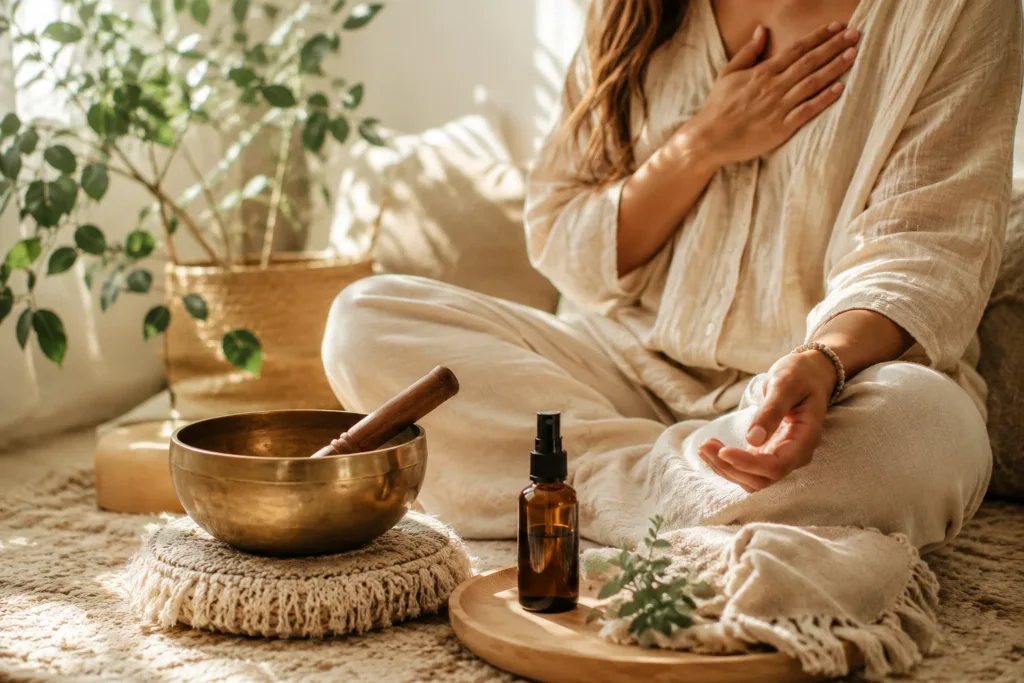
Try This 5-Minute Morning Nervous System Reset
Set your chosen scent and singing bowl within reach the night before. In the morning, sit somewhere comfortable, place both feet on the floor when possible, silence your phone, and give yourself five uninterrupted minutes.
You do not need to complete every step perfectly. Let the ritual meet you where you are that morning.
Minute 1: Notice Where You Are
Look slowly around the room and notice three neutral or pleasant details. You might see morning light on the wall, the shape of a plant, or the texture of a blanket.
Then notice what is supporting you. Feel the bed, chair, floor, or cushion beneath your body. Observe the temperature of the air and the quietest sound you can hear.
Before asking your body to relax, give it a moment to recognize where you are.
I am here. This is the beginning of a new day. I do not need to rush into it.
Minute 2: Breathe With Your Grounding Scent
Mist the surrounding space with your chosen aromatherapy product and allow the scent to reach you naturally. Notice whether it feels earthy, floral, fresh, warm, or woody.
Take a comfortable breath through your nose. Allow your exhale to become slightly slower if that feels natural, but do not force a deep breath or hold it longer than feels comfortable.
Breathe in gently and notice the scent. Breathe out slowly and let your shoulders soften.
The goal is not to perform a perfect breathing exercise. It is to notice that you are breathing and give your attention somewhere steady to rest.
Minute 3: Follow the Sound of the Bowl
Strike the singing bowl once and listen until the tone fades completely. Notice how the sound changes as it moves through the room. It may begin full and clear, then become softer until only silence remains.
Pause for one comfortable breath, then strike the bowl again. Thoughts about the day may appear. You do not need to push them away. Notice that your attention has wandered, then return to the fading sound.
Repeat two or three times.
Minute 4: Reconnect With Your Body
Place one hand over your heart and the other over your abdomen, or choose another comfortable point of contact. Notice your jaw, shoulders, chest, hands, stomach, legs, and feet.
Ask yourself:
- Where am I holding tension?
- What feels supported?
- What is ready to soften?
- What would help me feel steadier this morning?
Release only the tension that is ready to let go. Press your feet gently into the floor and notice the contact beneath them.
I am here. I am supported. I can meet this moment before I meet the rest of the day.
Minute 5: Choose One Intention
Choose one simple and realistic intention for the day:
- I will pause before rushing.
- I will take one task at a time.
- I can return to my breath.
- I do not need to solve the entire day right now.
- I will notice when my shoulders begin to tense.
- I will give myself space between tasks.
Strike the bowl one final time. Follow the tone into silence, take one comfortable breath, and begin your day.
No Singing Bowl? Try This Instead
You can still practice this morning nervous system reset without a sound healing instrument. Use a small chime, a short singing bowl recording, gentle humming, rainfall, birds outside, or the natural sound of your breath.
The specific sound matters less than the way you listen to it. Choose something steady, follow it with your attention, and notice the moment it ends.
Make Nervous System Reset Exercises Part of Your Day
A ritual becomes easier to maintain when you connect it to something you already do. You might practice after opening the curtains, while coffee or tea is brewing, after brushing your teeth, or before checking your phone.
Consistency matters more than creating the perfect wellness space. Five quiet minutes in the same chair each morning may become more meaningful than an elaborate routine you rarely complete.
You can also adapt these nervous system reset exercises into a 30-second practice when tension begins to build:
- Feel both feet against the floor.
- Relax your jaw and shoulders.
- Notice one scent.
- Let your exhale slow.
- Follow one sound until it ends.
Use this shorter reset before a meeting, after a difficult conversation, or between tasks. The goal is not perfect calm. It is to notice tension sooner and build a familiar way to respond.
Frequently Asked Questions About Nervous System Resets
How long does it take to reset your nervous system?
Some people notice a small shift after a few minutes of slower breathing and sensory grounding. Others may need more time or may not notice an immediate difference. A five-minute reset creates a temporary pause, while longer-term nervous system regulation is supported by repeated practice, rest, movement, supportive relationships, and professional care when needed.
What is the fastest way to calm your nervous system?
There is no single method that works fastest for everyone. Slow breathing, feeling your feet against the floor, listening to a steady sound, and noticing a familiar scent are simple places to begin. The most useful method is usually one that feels comfortable enough to repeat.
Can aromatherapy help with a nervous system reset?
A pleasant scent can provide a sensory focal point and mark the beginning of a calming ritual. With repetition, the aroma may become associated with pausing and breathing. Aromatherapy should be treated as a supportive wellness practice rather than a treatment for anxiety or another health condition.
Can singing bowls help with anxiety?
Early research suggests that Tibetan singing bowl meditation may support short-term relaxation and reduce self-reported anxiety. The evidence is still developing, so singing bowls are best used for meditation, focused listening, and relaxation.
Create Your Own Nervous System Reset Ritual
A nervous system reset does not require you to control every thought or remain calm throughout the day. A five-minute ritual simply gives you time to notice what is happening before the day carries you forward.
Scent brings you into the present. Breath creates a gentle rhythm. Touch reconnects you with your body, and sound gives your mind something steady to follow. Small practices can become meaningful when repeated.
Choose an aroma that feels grounding. Let one resonant tone fill the room. Take one comfortable breath before the day begins.
You can return to that moment whenever you need it.

Add comment